
Fresh from the halls of EuroShop 2026 in Düsseldorf, the verdict is in: retail isn’t just “changing”, it’s being structurally rebuilt. In a volatile economic climate, the world’s leading retailers are moving past the “experimental” phase and into strategic execution.
For the Australian market, where high labour costs and a tech-savvy consumer base drive the agenda, these five global shifts offer a clear roadmap about where the capital is flowing. Dashing Group did a deep dive:
1. Automation Hits Everyday Retail
Automation is no longer tucked away in a dark warehouse; it’s front and centre on the shop floor. From AI-driven cooking robots in food service to automated shelf-replenishment systems, the goal is twofold:
- Operational Efficiency: Reducing the burden of manual, repetitive tasks.
- Elevated Service: Shifting staff away from “tasks” and back to “service,” ensuring human connection remains the heart of the brand.
2. RFID Moves into Store Infrastructure
RFID is no longer a standalone tool. It has evolved into a core component of connected retail, serving as the backbone for real-time data, enhanced automation, and entirely new checkout experiences.
3. Smarter, Faster Checkouts
The “frictionless” dream is finally becoming a reality. We are seeing a massive shift toward AI-powered item recognition. By using smart cameras and computer vision, systems can identify products in seconds. This means:
- High Throughput: Moving more customers through the “sensitive” final stage of the journey faster.
- Reduced Errors: AI helps catch errors or “forgotten” items at self-checkouts more accurately than traditional weight sensors.
4. Flexible & Modular Store Design
The days of static, 10-year store fit-outs are numbered. Retailers are investing in modular systems that allow for rapid transformation. Whether it’s a seasonal pivot, a weekend pop-up, or a new brand activation, modularity allows for:
- Agility: Responding to trends in weeks, not months.
- Cost-Effectiveness: Reusing high-quality fixtures across different locations rather than commissioning new ones for every site.
5. Sustainability in Action
Sustainability has officially graduated from “greenwashing” to verified data-driven solutions. Retailers are now prioritising circularity over “looking green”. This includes:
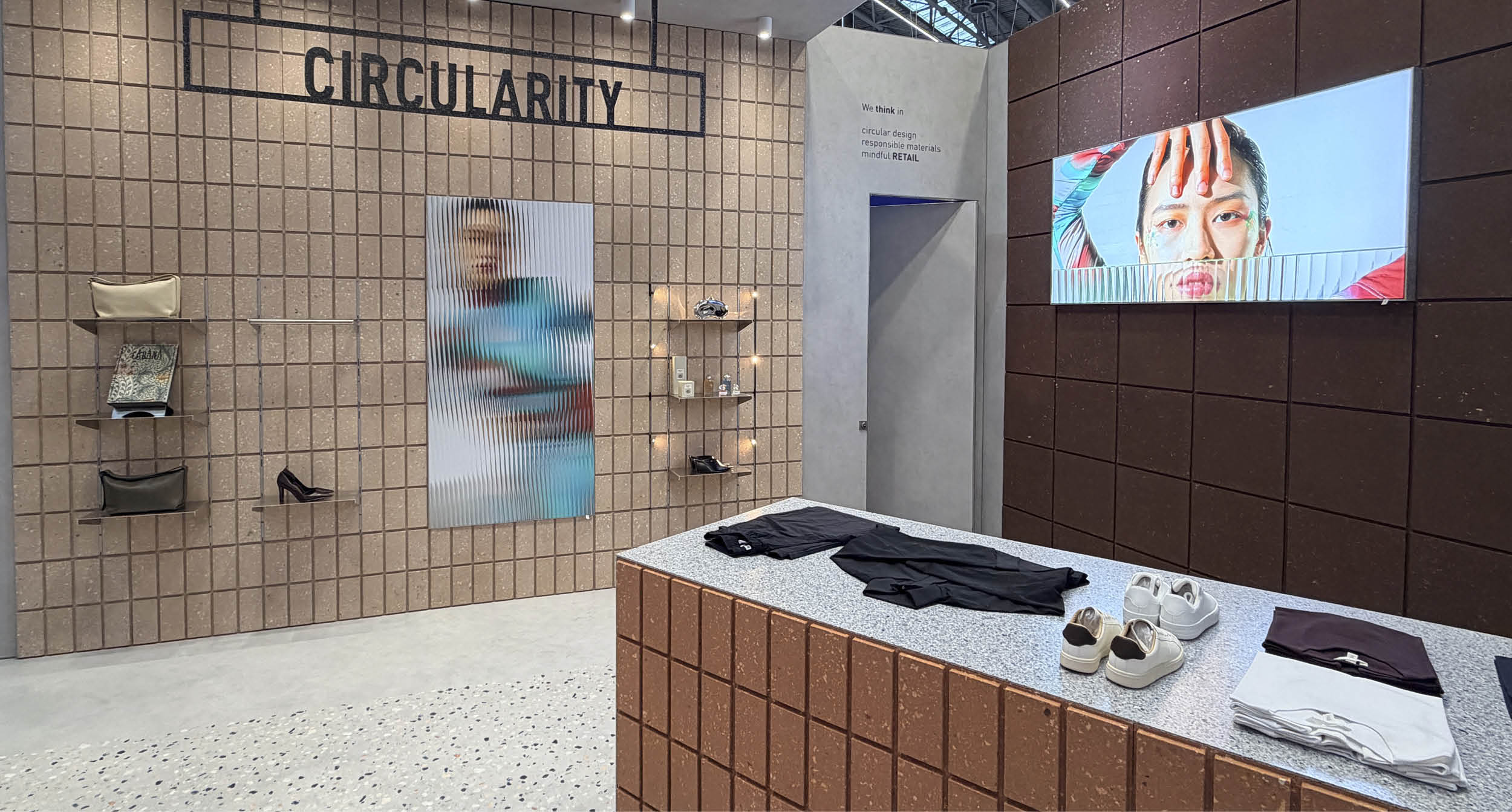
- Circular Materials: Using recycled textile boards and reusable structures that can be fully dismantled and repurposed. At the show, we saw spaces demonstrating how store design and materials can be developed with reuse, recyclability and circular economy principles at their core.
- Reverse vending machines (RVMs) were strongly represented at EuroShop as retailers prepare for the expansion of Deposit Return Schemes (DRS) across Europe and the upcoming UK rollout in 2027.
The Bottom Line: The focus for 2026 isn’t just about the “newest” gadget. It’s about integration. The winners are those connecting their physical assets with data-rich ecosystems to create stores that are efficient, adaptable, and genuinely sustainable.
Is your 2026 strategy ready for these shifts?
Dashing has compiled a comprehensive deep dive into the innovations we saw on the ground at EuroShop. We’re ready to share these insights to help your brand stay ahead of the curve.
Contact us to book a full presentation for your team.