
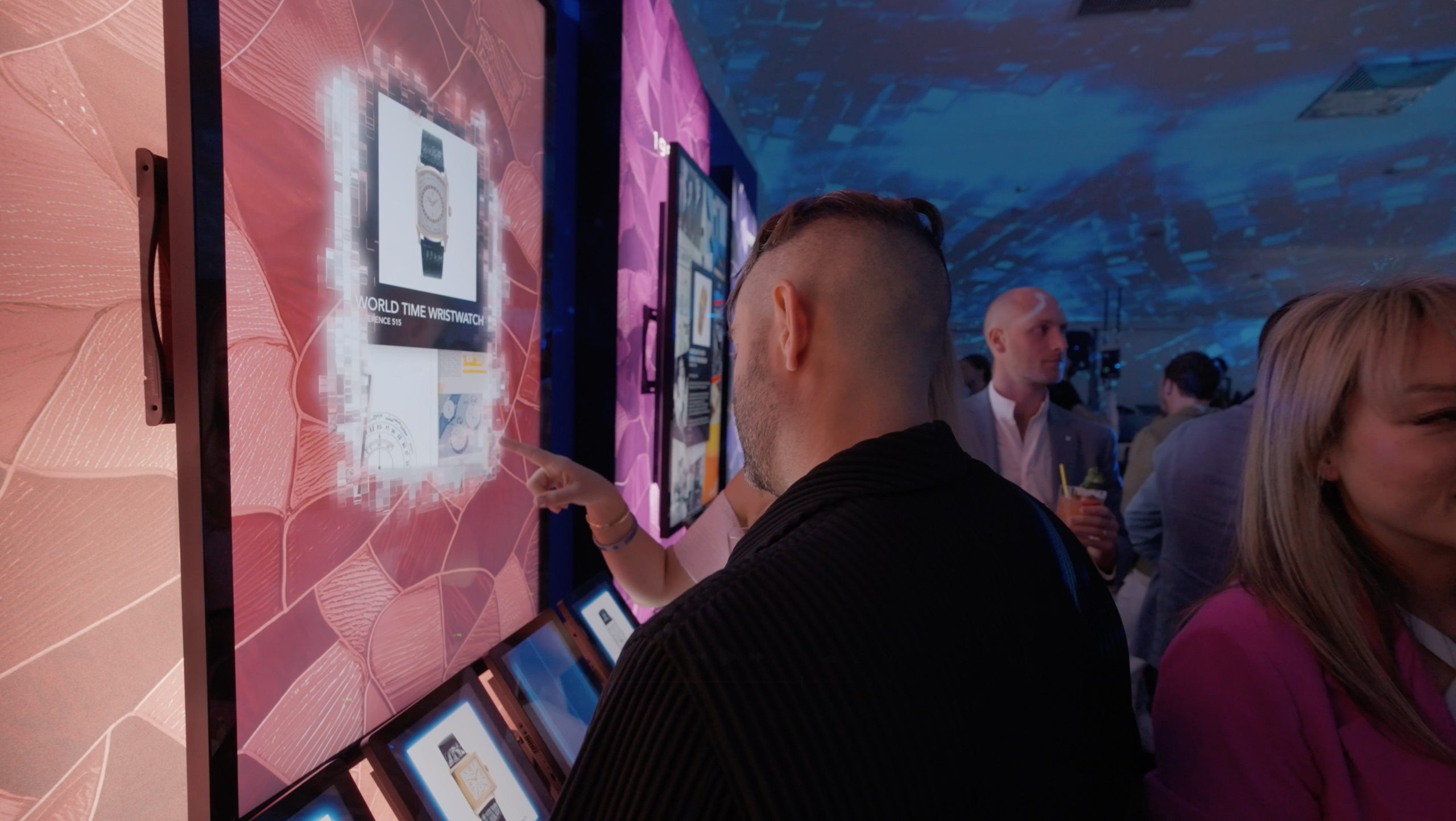
Retail is changing in a really interesting way. Walk into a store today and you’ll see it right away. Physical signage hasn’t gone anywhere, but it now sits side by side with digital screens that move, update, and respond in real time. Brands can tell richer stories, highlight products in new ways, and connect with shoppers in moments that matter. Plus, these screens are now equipped to capture real time consumer behavior data making them an even smarter visual merchandising tool.
Here’s a closer look at the digital technologies shaping that experience.
- Lift & Learn. These displays turn simple product interaction into something memorable. When a shopper picks up an item, the screen responds with tailored content. Making the interaction feel personal and gives brands useful insights into what people are engaging with.
- Digital LED. Built to bend, curve, and scale, LED screens can wrap around architectural features or create large, immersive moments. Perfect for storefronts, windows, or bold in-store statements that pull people in.
- Transparent Mesh. This format blends visibility with impact. You can see through it from both sides, which makes it ideal for windows and glass surfaces.
- Transparent OLED. This is where storytelling and product truly meet. These screens layer digital content directly over physical products, creating a 3D-like experience.
- Micro LED. Designed for ultra-fine pixels, micro LED delivers sharp detail and vibrant clarity. It’s a great fit for displays where image quality really matters and every detail needs to stand out.
- Digital LCD. High-resolution screens and strong color make these displays reliable for everything from promotions to product storytelling.
- E-ink. These battery-powered, paper-like displays are simple and efficient. Content can update quickly without constant power use, which makes them ideal for pricing, promotions, and fast merchandising updates.
- Canvas Screen. Ultra-thin and flexible, these turnkey panels can be configured for any space. They can sync content across multiple surfaces, creating a cohesive visual flow that feels modern and intentional.
When you bring these tools together with traditional signage, the store becomes a fluid responsive ecosystem, keeping people curious as they shop. See digital in action.