
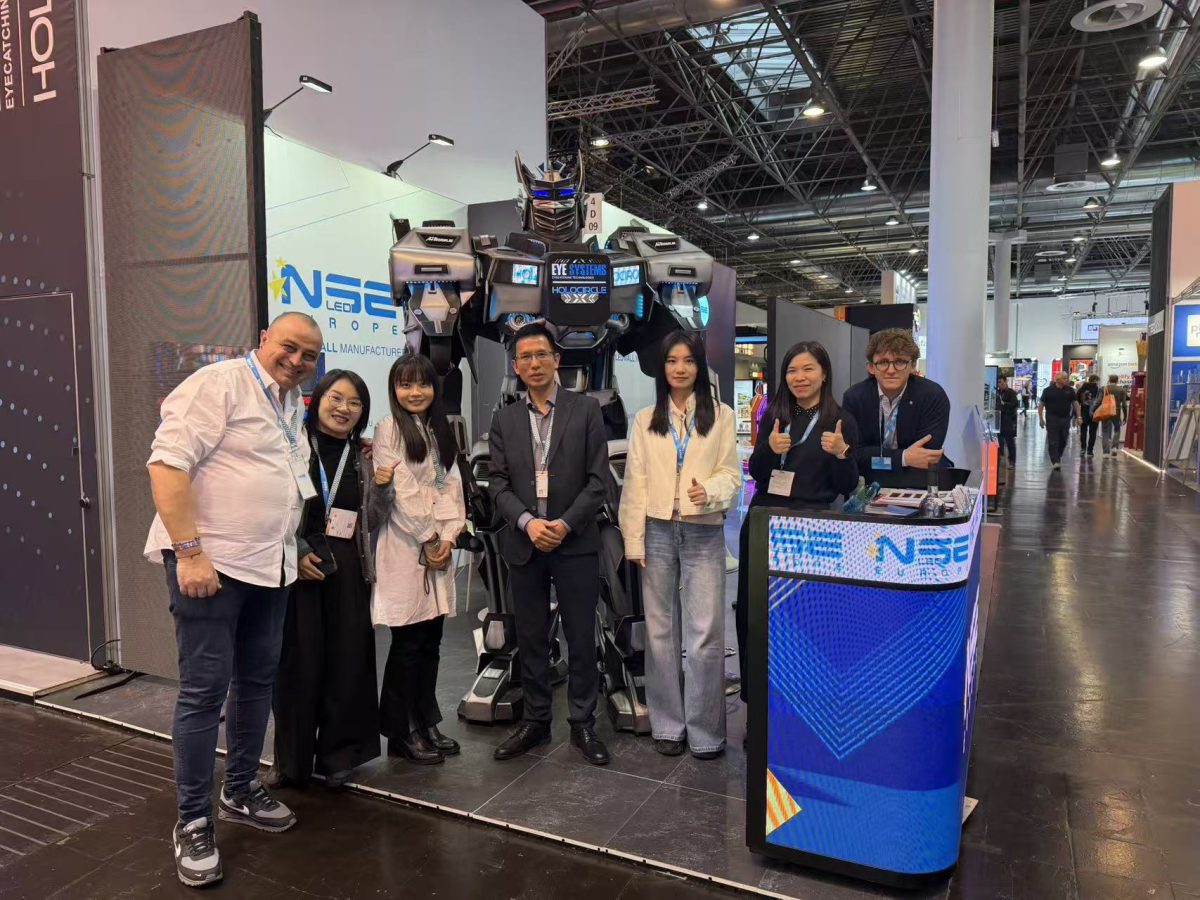
LED display technology is increasingly used in retail environments to replace static signage and support digital content across physical store spaces. Retailers use these systems for storefront displays, in-store communication, and exhibition installations.
LED displays allow brands to present dynamic visual content and manage messaging across multiple locations. Connected systems can update content remotely and integrate with marketing platforms, supporting coordinated campaigns across physical and digital channels.
Digital Display Systems in Retail Environments
Modern retail LED installations are designed to support dynamic visual communication within stores and shopping environments. Displays can be used for promotional content, brand storytelling, and product information.
Some systems integrate interactive elements such as touch interfaces, motion-triggered content, or QR-code interactions, allowing visitors to engage directly with digital content.
Retail networks may also use LED displays as part of broader digital infrastructure, enabling centralized content management and synchronized messaging across multiple store locations.
Transparent LED Displays for Storefront Applications
Transparent LED displays are often used in retail windows to combine digital content with visibility into the store interior. These systems typically allow 60–80% transparency, using strip-style LED layouts that preserve sightlines while displaying video or graphic content.
Installed behind glass façades, transparent displays enable storefront messaging without blocking product visibility inside the store. This approach allows windows to function both as architectural elements and as digital communication surfaces.
Because storefront installations operate in direct daylight, brightness performance is an important technical factor. Many window displays operate above 3000 nits to maintain visibility in outdoor lighting conditions.
LED Display Configurations for Exhibitions and Brand Spaces
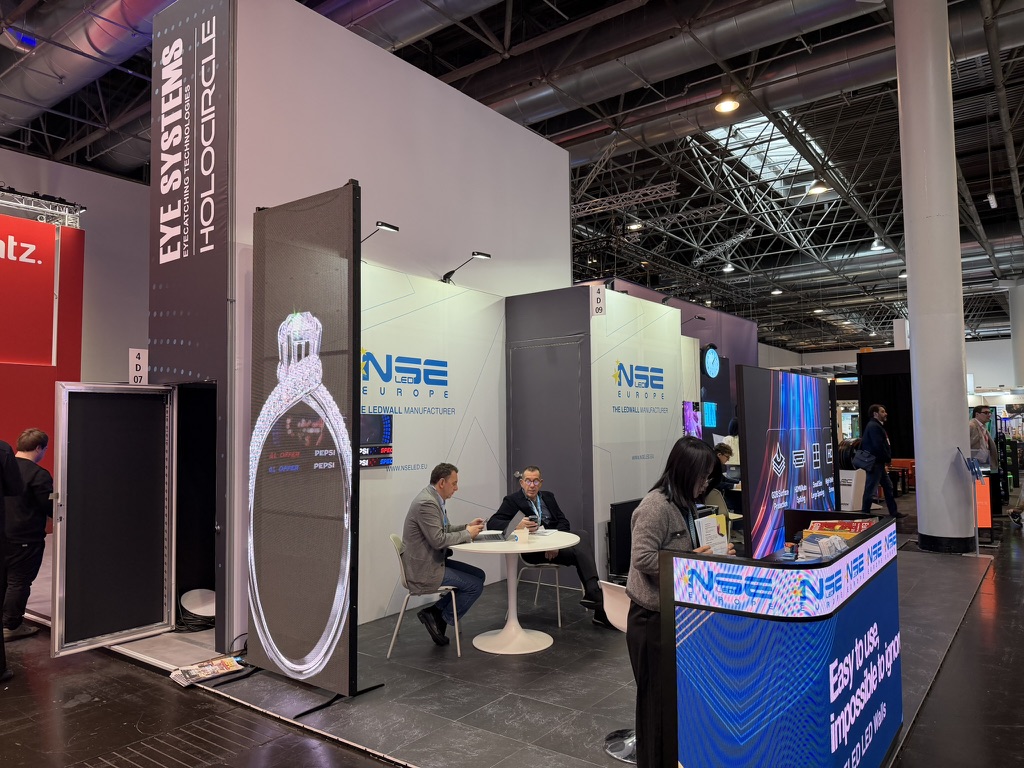
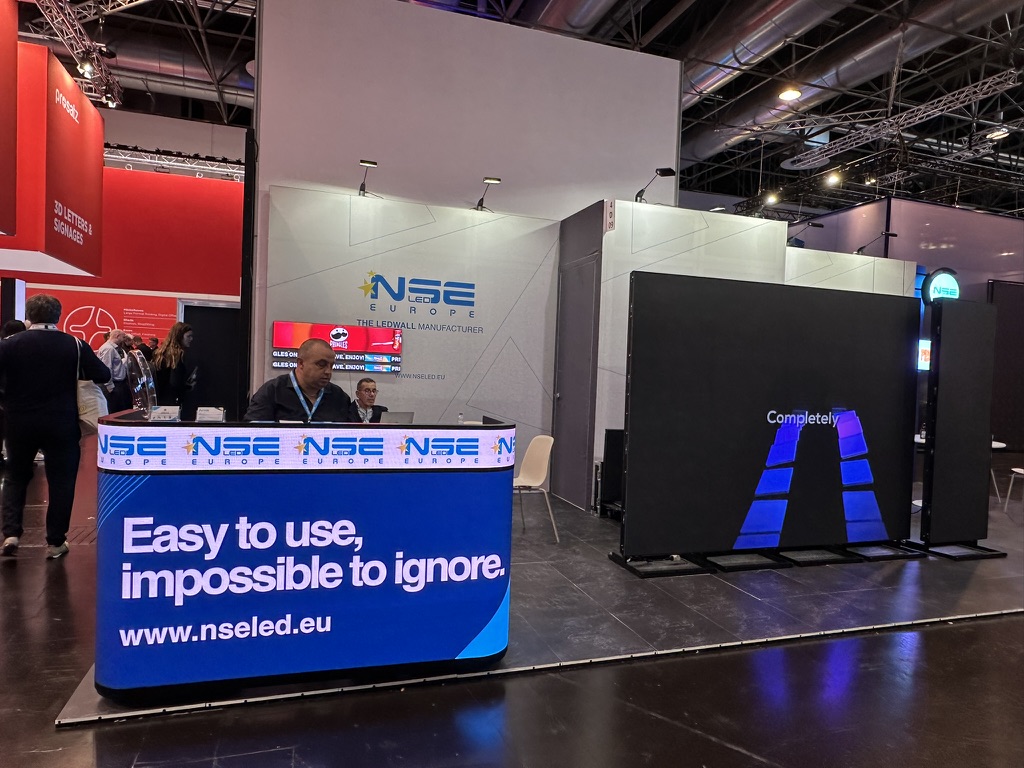
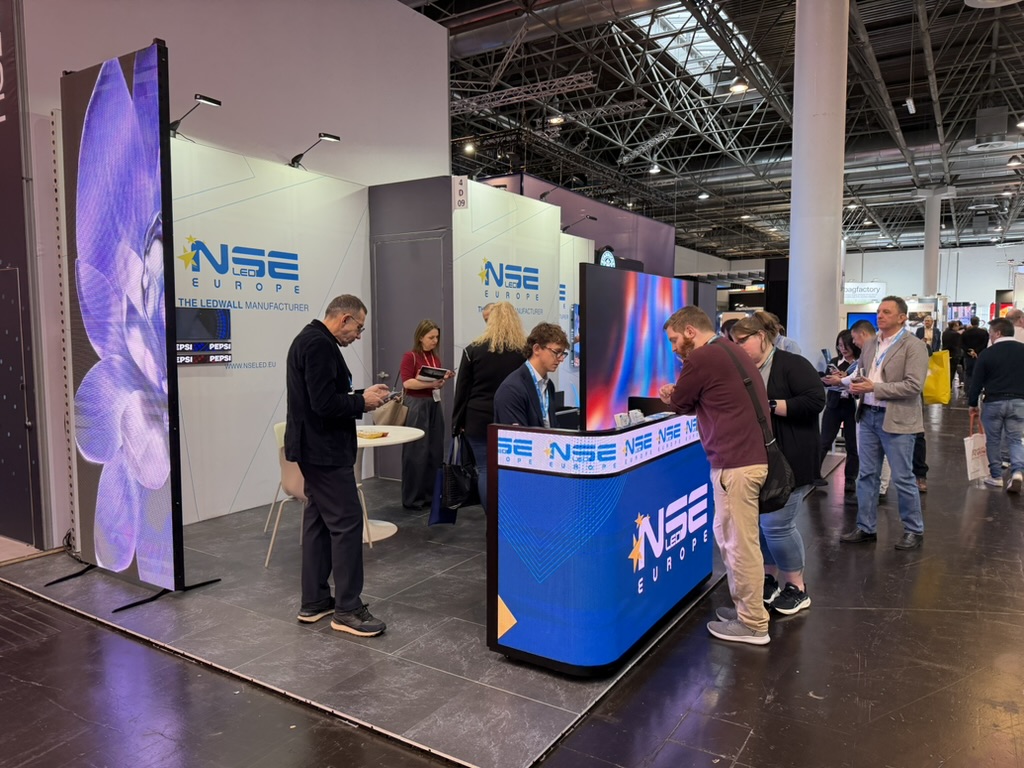
LED display systems are also widely used in exhibitions, showrooms, and brand environments. Depending on the size and layout of the space, installations may include:
-
Large-format LED video walls
-
Corner or curved display structures
-
Suspended LED signage
-
Cylindrical or immersive display installations
Display configuration is often determined by booth size, visitor flow, and viewing distance. Fine pixel pitch displays are typically used for close viewing environments, while larger pitch displays may be sufficient for overhead signage or long-distance viewing.
Technical Considerations for LED Installations
Several technical factors influence LED display performance in indoor environments:
-
Pixel pitch, which determines image clarity at specific viewing distances
-
Brightness levels, typically between 800–1200 nits for indoor applications
-
Refresh rate, often above 3840Hz to prevent flicker in video recordings
-
Power consumption and electrical load planning
Installation requirements may also include structural considerations for suspended displays and compliance with electrical and safety regulations in exhibition venues.
LED Displays in Retail and Brand Communication
LED technology is increasingly integrated into retail design, exhibition environments, and brand communication strategies. As digital content becomes a central part of physical retail experiences, display systems are used to support promotional messaging, product presentation, and visual storytelling across multiple environments.
| Main Contact: |
| Simon Lan |
| sales@nseled.com |
| Role / Position |
| CEO |
| Company |
| Shenzhen Nseled Co.,Ltd. |
| Website / URL |
| www.nseled.com |
| EuroShop 2026: Hall & Booth # |
| Hall 4, Booth D09 |