
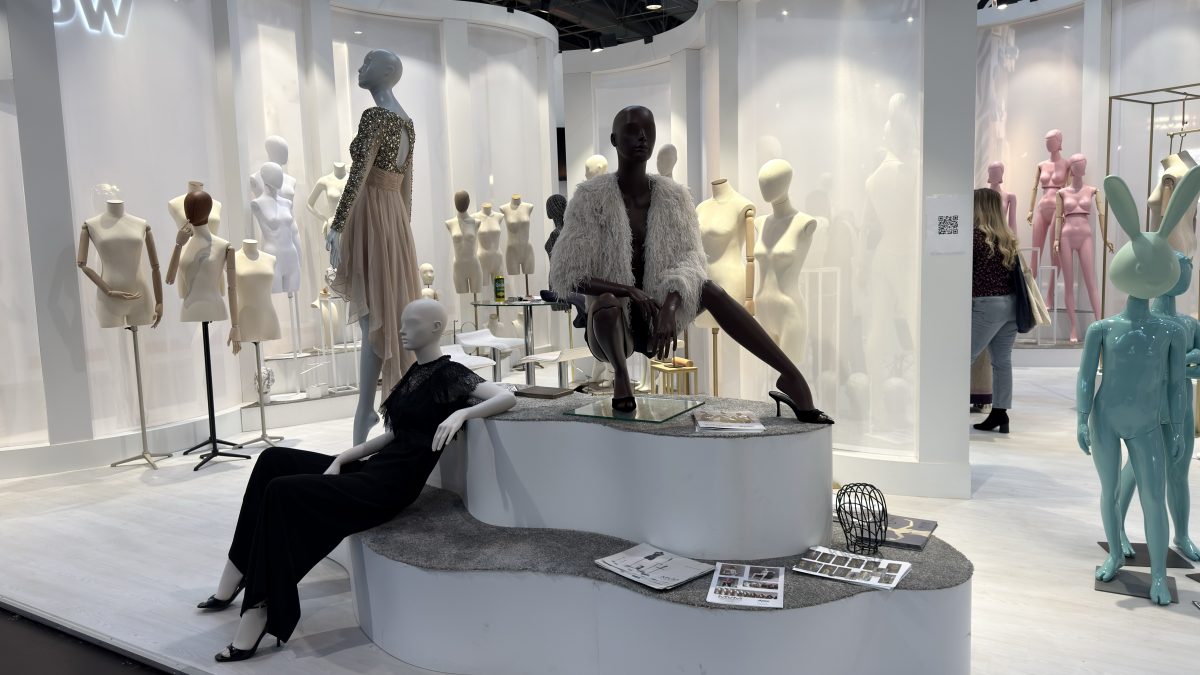
Introduction of Rafet Meric and Meric Display Mannequins
Rafet Meric graduated from Mimar Sinan Fine Arts School in Istanbul. After completing his studies, he explored work in carpet design and pictorial advertising, while also attending German language courses at Deutsche Schule in Istanbul.
During this period, he came across German display magazines and discovered Schaufenster, a publication focused on display and retail presentation. In 1958 he wrote to the magazine, introducing himself as a young sculptor and sending examples of his work. The magazine replied that Munich-based mannequin producer Midnacht was interested in hiring a sculptor.
Meric travelled to Munich with a train ticket and began working for the company. There he participated in the full production process of display mannequins. His work started with clay sculpting, and he later learned about materials such as polyester, which allowed mannequins to become lighter than traditional plaster forms. He also worked in the painting and make-up departments, gaining experience across all stages of mannequin production.
After working in Munich for three years, he briefly worked in the painting department of BMW, before deciding to return to Turkey and establish his own business.
Founding of the Company
After returning to Turkey, Rafet Meric worked as an art teacher for one year before founding his own mannequin production company together with his wife, Tülinay Meric, who left her position as a teacher of history and Turkish to join the business.
For many years the couple worked together developing display mannequins for the Turkish retail sector. Tülinay Meric remained involved in the company until her passing in 2022. Rafet Meric continues to remain active and interested in cultural life, documentaries, and sports.
Meric Display Mannequins was established during a period when the local industry faced practical challenges, including shortages of materials such as fiberglass, metal components, packaging materials, and iron molds. Despite these limitations, the company gradually built a production team that eventually grew to around 80 workers.
Development of the Business
Meric Display Mannequins developed as one of the early mannequin producers in Turkey. Rafet Meric’s background as a sculptor influenced the company’s approach to mannequin design, combining artistic modeling with practical display needs for retail.
During the 1980s, the company produced mannequins for German and other European firms. At one point, Meric obtained licensing rights to manufacture selected collections from the well-known mannequin brand Adel Rootstein.
Second Generation
In 1998, Rafet Meric’s son Hakan Alpay Meriç, a sculptor, joined the company. This marked the beginning of a new phase, with the development of new mannequin collections designed around evolving retail presentation needs.
The sculptural work behind the mannequins was carried out by sculptors working with catwalk models, with faces selected from numerous model references.
In 2002, Rafet Meric’s daughter Hulya Meric Korkmaz, who studied economics at Boğaziçi University, also joined the company. With the involvement of the second generation, the company began participating in international trade fairs and working more closely with corporate retail brands expanding in Turkey, Europe, the Gulf region, and Russia.
The company participated in EuroShop for the first time in 2005, and continued exhibiting in subsequent editions in 2008, 2011, 2014, 2017, 2020, 2023, and 2026.
During these years the company also produced mannequins for Spanish and Italian mannequin manufacturers, while developing collections for their retail clients.
Mannequin Design and Fashion Trends
Display mannequin design has often reflected broader fashion trends.
In the 1970s, mannequins began to adopt more dynamic and movable poses, inspired by runway presentations.
During the 1980s, mannequins reflected trends such as bold makeup and voluminous hairstyles.
In the 1990s and early 2000s, mannequin forms often followed fashion’s shift toward very tall silhouettes, stylized heads, and athletic body shapes.
These shifts in fashion aesthetics influenced the development of mannequin collections over time.
Conclusion
Meric Display Mannequins developed from a sculptor-led workshop into a family-run manufacturing company involved in the production of display mannequins for retail brands in Turkey and abroad.
Across decades of work and generational transition, one aspect of the process has remained consistent:
Display mannequins are still handmade.
| Main Contact: |
| HULYA MERIC KORKMAZ |
| hulya@mericmanken.com |
| Role / Position |
| EXPORT MANAGER |
| Company |
| MVM MERIC DISPLAY MANNEQUINS |
| Website / URL |
| https://www.mvmmannequins.com |
| EuroShop 2026: Hall & Booth # |
| Hall10 D11 |