
Mesh architecture and responsible lightness
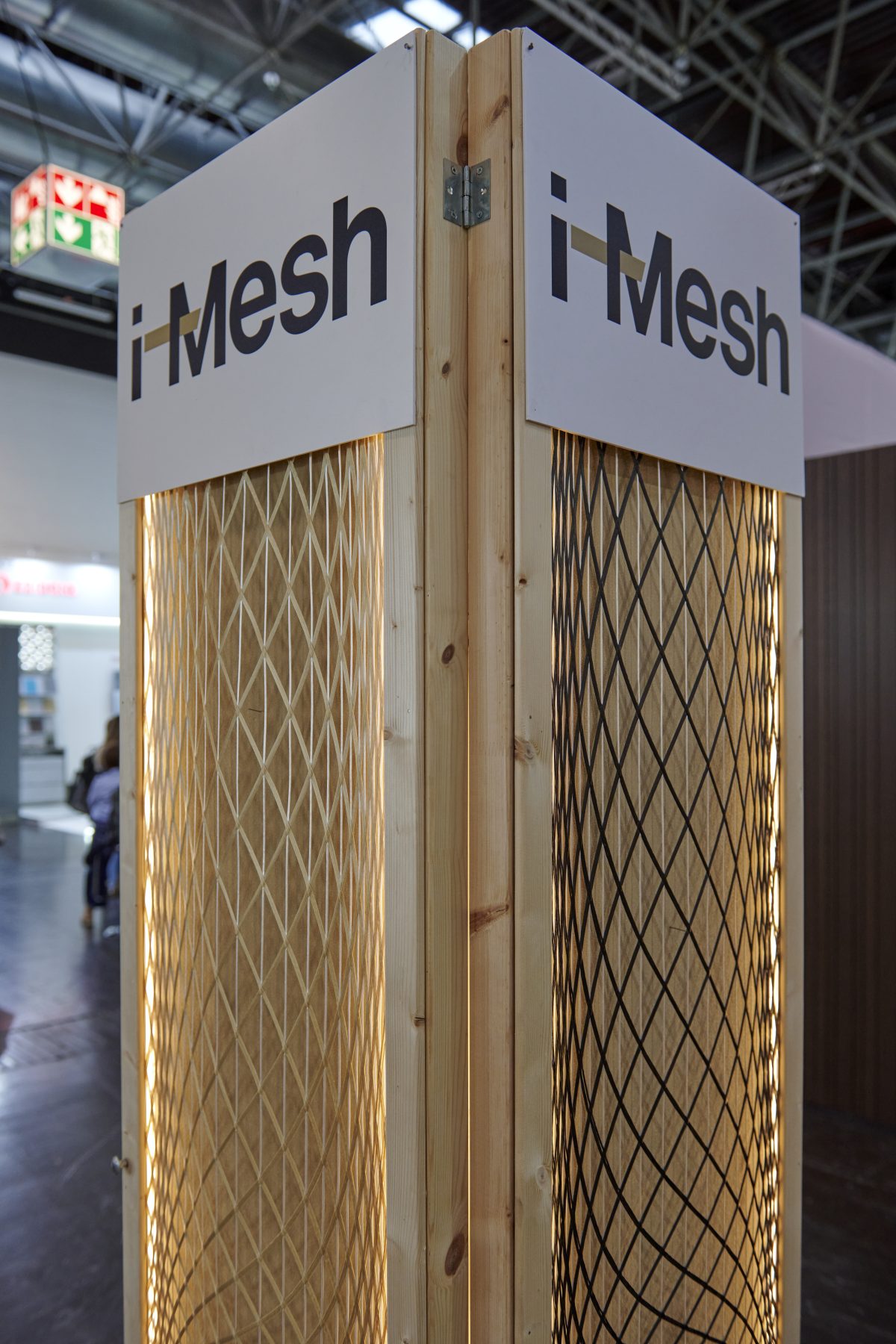
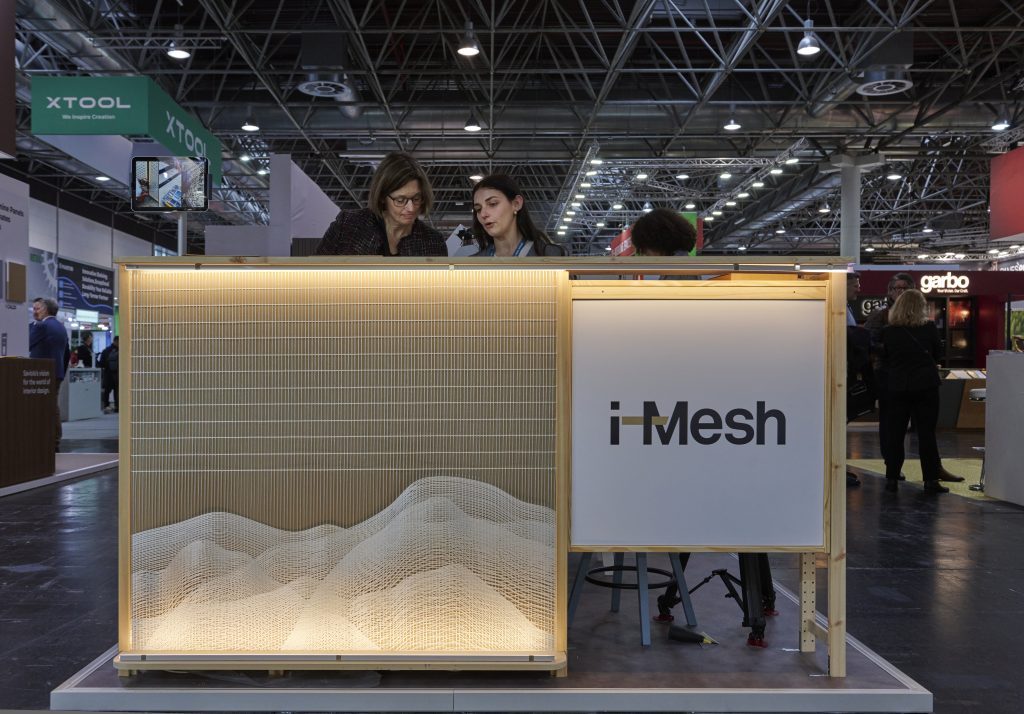
The i-Mesh booth presented at EuroShop 2026 was developed around a central idea: creating an exhibition space that is recognizable, elegant, and materially responsible.
The concept is based on reduction rather than accumulation. Instead of large volumes and enclosed structures, the project explores transparency, balance, and spatial openness. The result is a lightweight exhibition architecture that creates a clear spatial experience without relying on mass or visual barriers.
In an exhibition environment often characterized by oversized, temporary structures, the project proposes a different approach: subtraction instead of addition, transparency instead of enclosure, and connection rather than separation.
Island configuration: accessibility as a design strategy
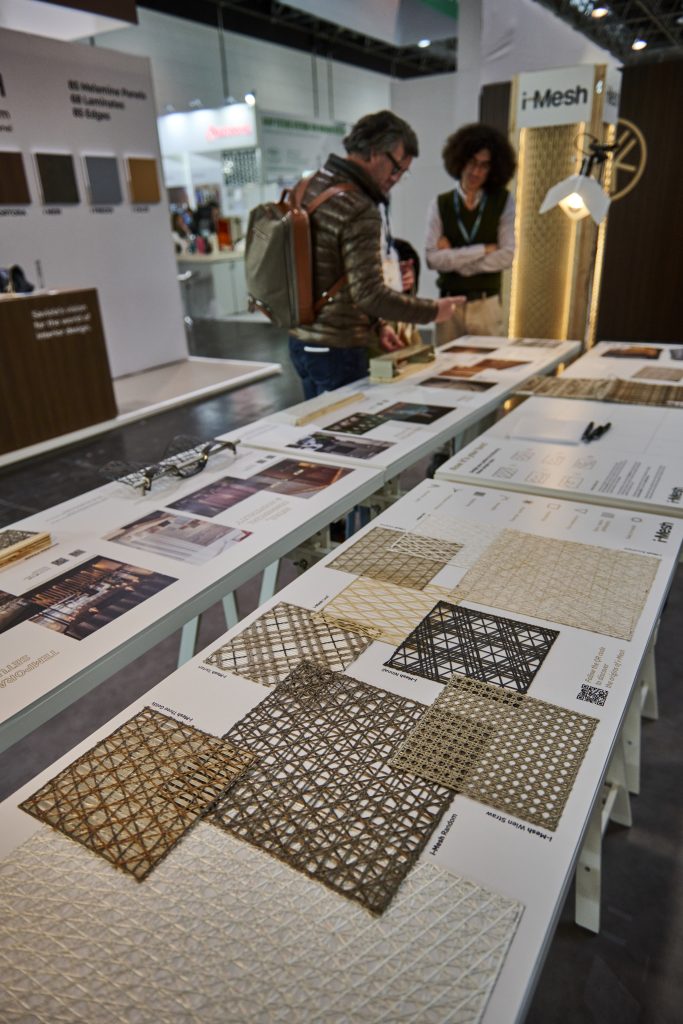
The booth was conceived as an island configuration, allowing full accessibility from all sides. Without barriers or defined entrances, visitors could approach and move through the structure from any direction.
This open layout created visual continuity with the surrounding exhibition space. The perimeter of the stand functions less as a boundary and more as an invitation.
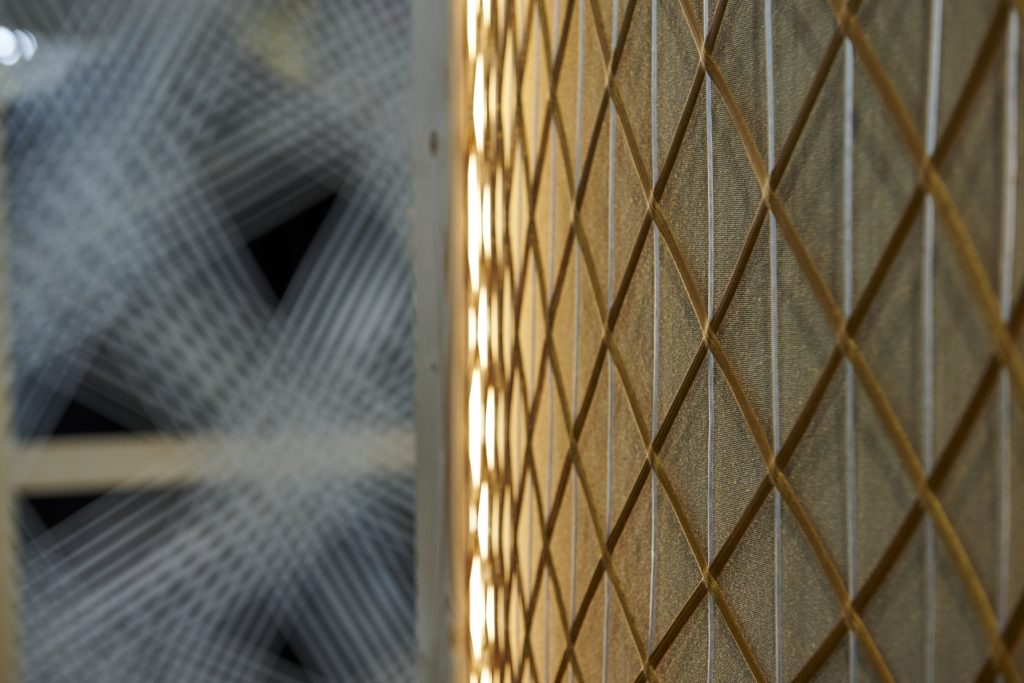
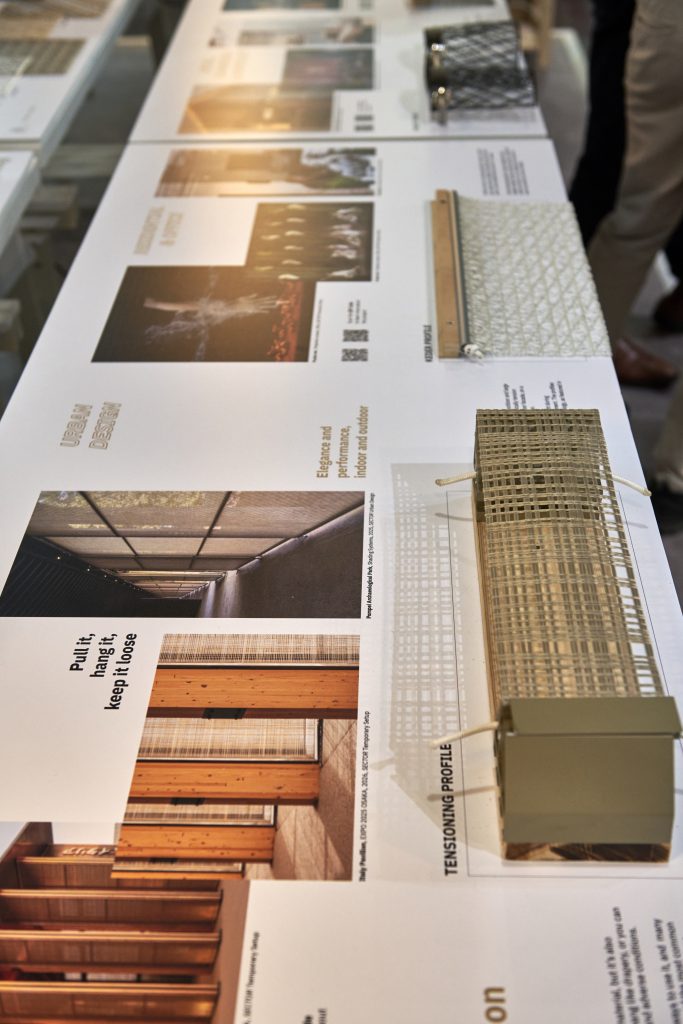
The structural system is built from modular elements combined with the tensioned i-Mesh textile material, creating a structure that appears visually light while maintaining structural presence. In this system, each component serves both a technical function and a spatial role.
Within interior architecture and exhibition systems, i-Mesh operates simultaneously as surface, structure, and communication medium. Rather than acting as a secondary covering, the textile becomes a primary architectural element.
Material experience and spatial interaction
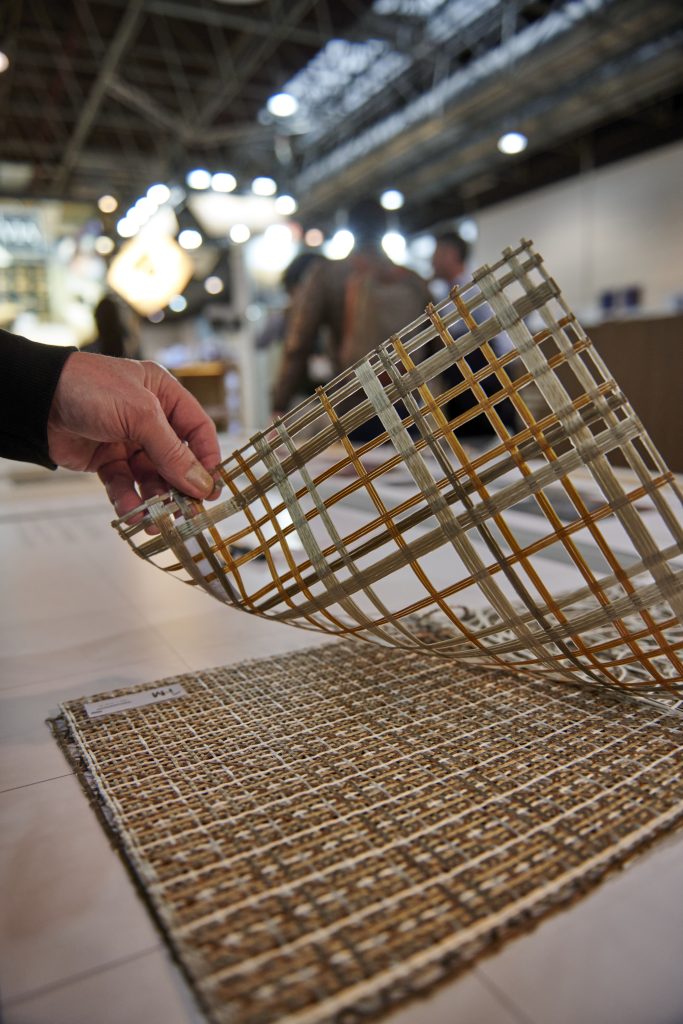
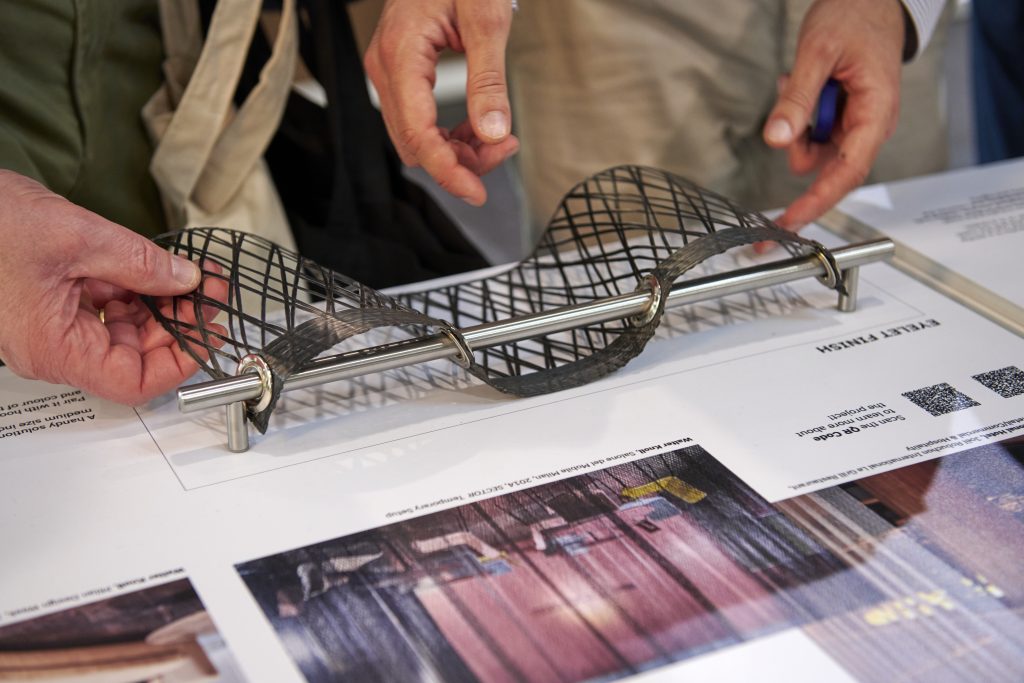
The material itself plays a central role in the visitor experience. Its tension, resistance, and texture become evident through touch, allowing visitors to engage directly with the structure.
This tactile interaction shifts the visitor from passive observer to participant. In an environment where immersive design is increasingly explored, the physical qualities of the material become an important part of the spatial narrative.
Zero-waste design as a structural principle
The project is guided by a zero-waste design approach, where the lifecycle of the installation is considered from the beginning.
All components are designed to be dismantled quickly, transported efficiently, and reused in future installations. The modular structure allows the system to be reassembled in different configurations without generating material waste. Even the packaging forms part of the overall system rather than existing as a disposable element.
In a trade fair context where structures are often built for a single event, the project presents a reusable and adaptable alternative based on modular construction and durable materials.
Here, sustainability functions as a structural principle within the design process rather than a separate communication element.
Responsible lightness as a design position
The project does not pursue monumentality. Instead, it focuses on precision and essentiality.
“Responsible Lightness” describes this approach: a way of conceiving exhibition architecture as a system where material efficiency, structural clarity, and spatial experience are closely connected.
Recognition from AIT Trend Scouting
The i-Mesh booth was selected within the AIT-Dialog trend scouting and received a mention in the final ranking.
The recognition highlights projects that combine spatial design, material research, and sustainable approaches to exhibition architecture.
Within the wider exhibition context, the final AIT award was granted to a project centered on material sustainability — reflecting the growing importance of this topic in exhibition and architectural design.
| Main Contact: |
| Claudia Favia |
| marketing2@i-mesh.eu |
| Role / Position |
| Junior Art Director |
| Company |
| i-Mesh |
| Website / URL |
| https://www.i-mesh.eu/ |
| EuroShop 2026: Hall & Booth # |
| 11C72 |