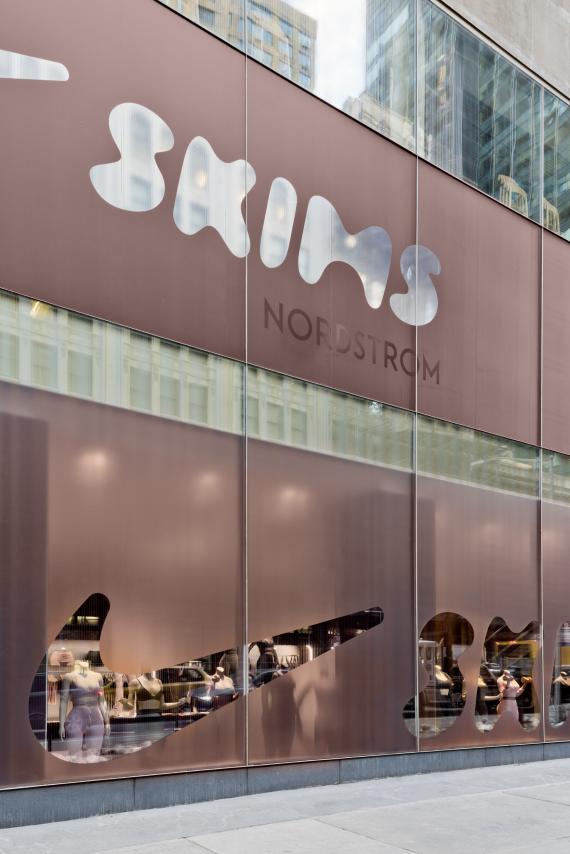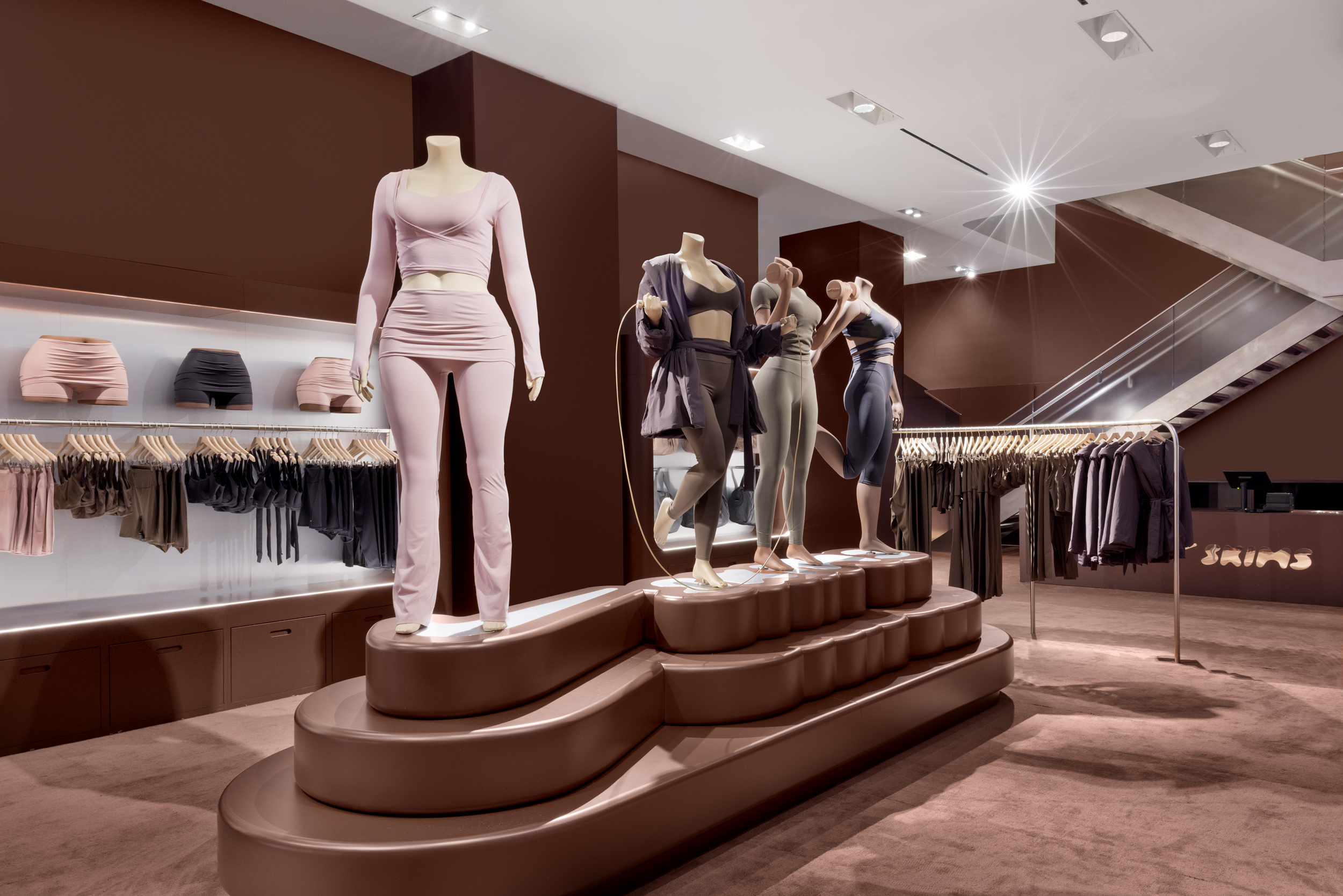
In Manhattan, where retail is as much about cultural presence as it is about product, Harlequin Design brings Skims into sharp spatial focus with a pop-up installation that transforms minimalism into a statement.
Known for its ability to translate brand identity into immersive environments, Harlequin once again demonstrates its command of physical storytelling—this time through a concept that feels both intimate and architectural.
A Study in Form and Fluidity
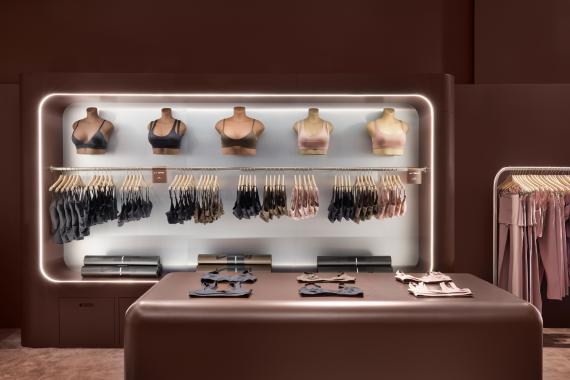
At the heart of the installation is a sculptural approach to space. Rather than relying on overt branding or heavy visual layering, the environment is defined by clean lines, soft curves, and a restrained palette that mirrors Skims’ core ethos: simplicity, inclusivity, and second-skin design.
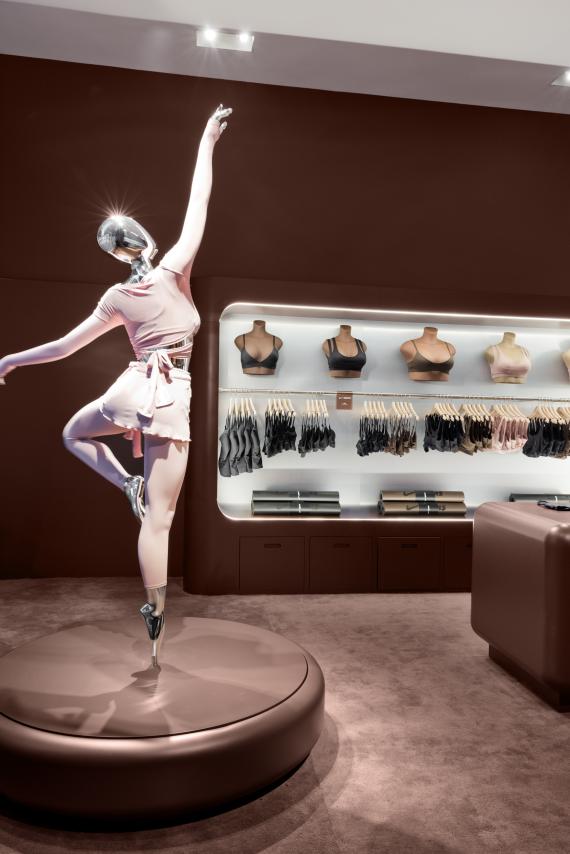
The result is a space that feels almost gallery-like. Product becomes the focal point, elevated through thoughtful placement and proportion, while the surrounding architecture frames each moment with precision. This balance between openness and structure allows the installation to breathe—an intentional contrast to the density of Manhattan retail.
Translating Identity Into Space
Since its founding, Skims has built a reputation around redefining essentials, offering a wide range of inclusive sizing and skin-tone-driven color palettes that challenge traditional standards in fashion . This philosophy is carried seamlessly into the physical environment.
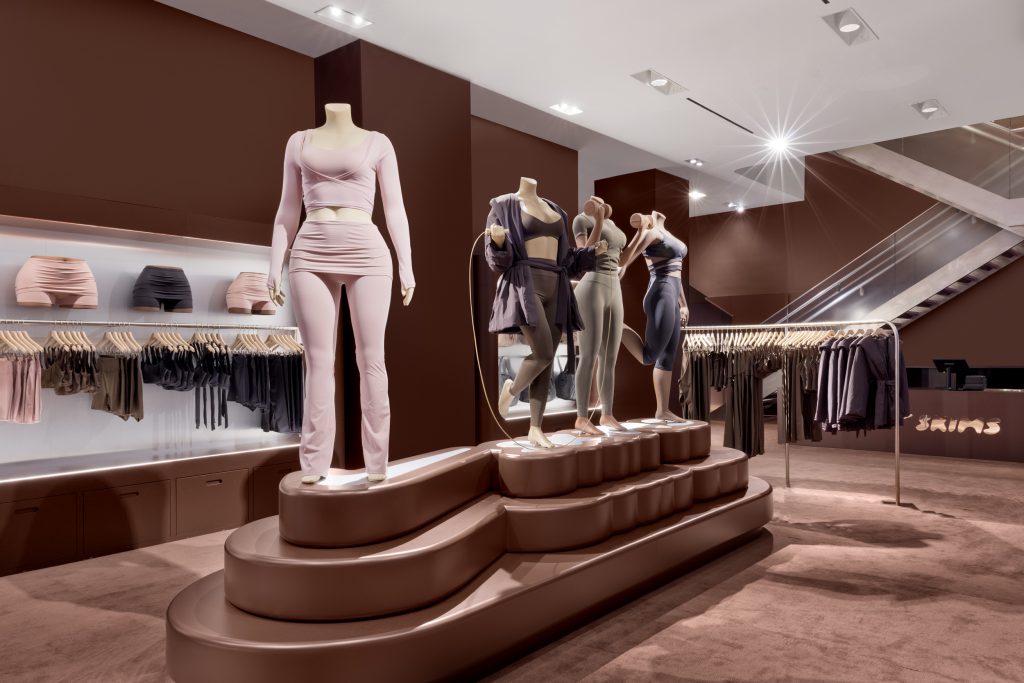
Soft tonal gradients and tactile finishes echo the brand’s signature neutrals, while curved fixtures and modular displays reinforce the idea of adaptability and comfort. Every design decision feels aligned with the product itself—fluid, accessible, and designed for real bodies.
Precision Meets Experience
Harlequin’s strength lies not only in concept, but in execution. The installation is meticulously produced, with every surface, fixture, and transition carefully considered. This level of detail ensures that the space operates as both a visual statement and a functional retail environment.
Circulation is intuitive, guiding visitors through the space in a way that encourages exploration without overwhelming the senses. Moments of pause—where product, material, and light intersect—create opportunities for deeper engagement, turning a simple visit into an experience.
The Evolution of the Pop-Up
As pop-ups continue to evolve from temporary retail solutions into cultural touchpoints, installations like this highlight a shift toward refined, design-led environments. Here, spectacle is replaced with subtlety, and impact is achieved through restraint.
Through this Manhattan installation, Harlequin and Skims prove that minimalism, when executed with intention, can be just as powerful as maximalism—offering a quiet confidence that resonates long after the space is gone.