Christian Dior Couture Bamboo Pavilion, Tokyo
A Monument to LVMH’s “Localized Grandeur” Strategy
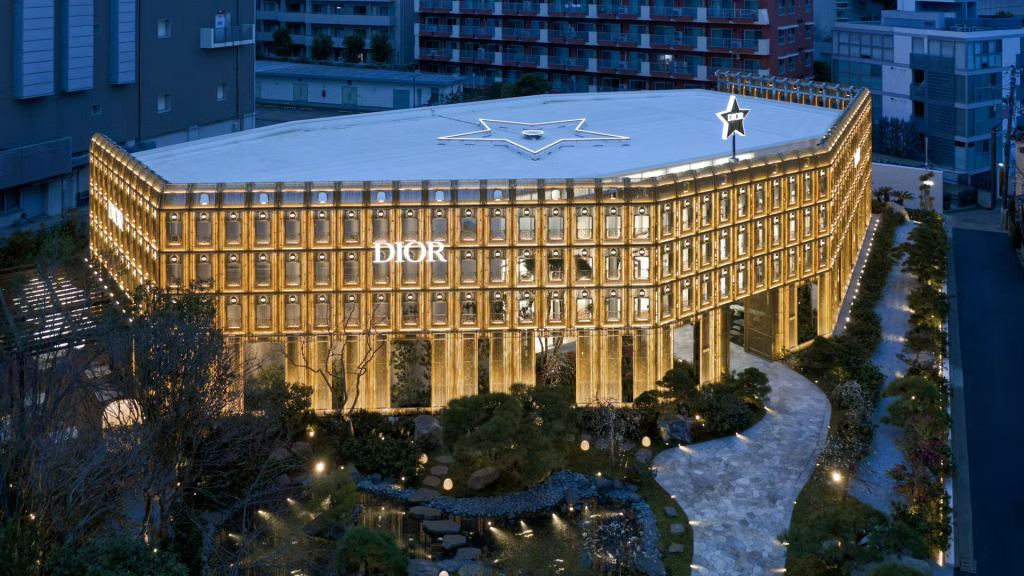
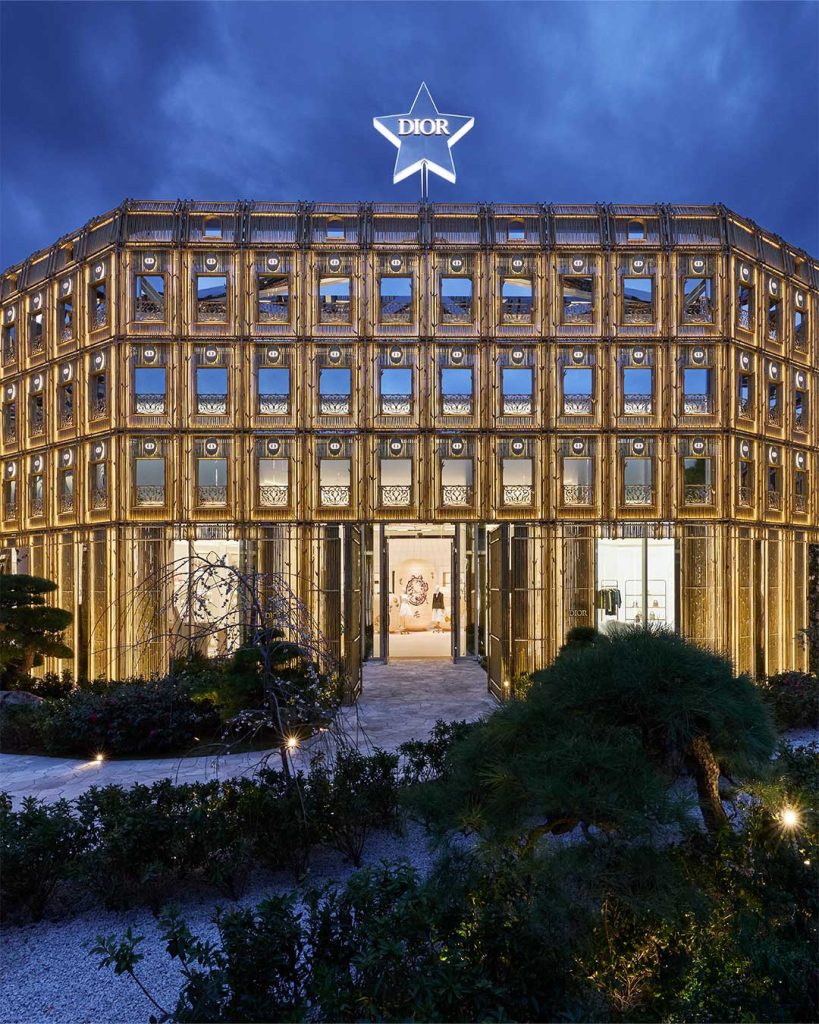
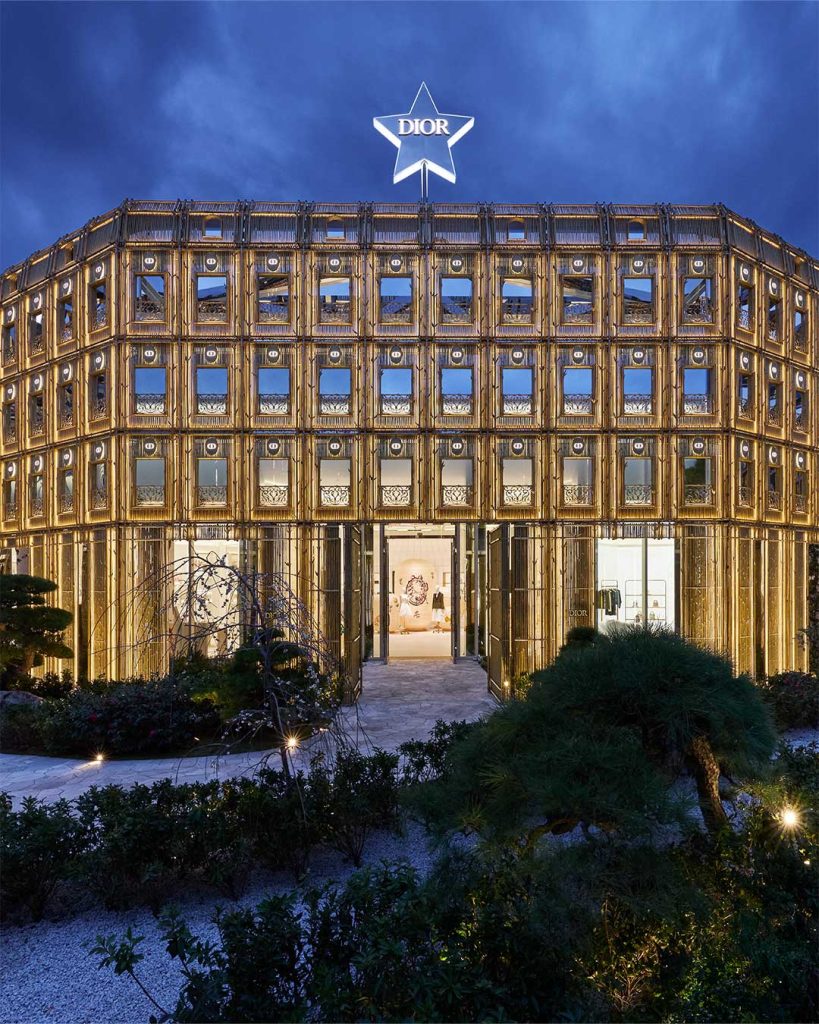
In February 2026, Christian Dior Couture unveiled a landmark 1,800-square-meter Bamboo Pavilion in Tokyo’s stylish Daikanyama district—an ambitious activation that exemplifies LVMH’s evolving “Localized Grandeur” strategy.
Blending Parisian elegance with Japanese cultural and natural aesthetics, the pavilion demonstrates how global luxury houses can cultivate deep local resonance without diluting brand identity. More than a retail environment, it is a cultural statement—an immersive expression of Dior’s heritage refracted through the lens of Japan.
Architecture as Cultural Dialogue
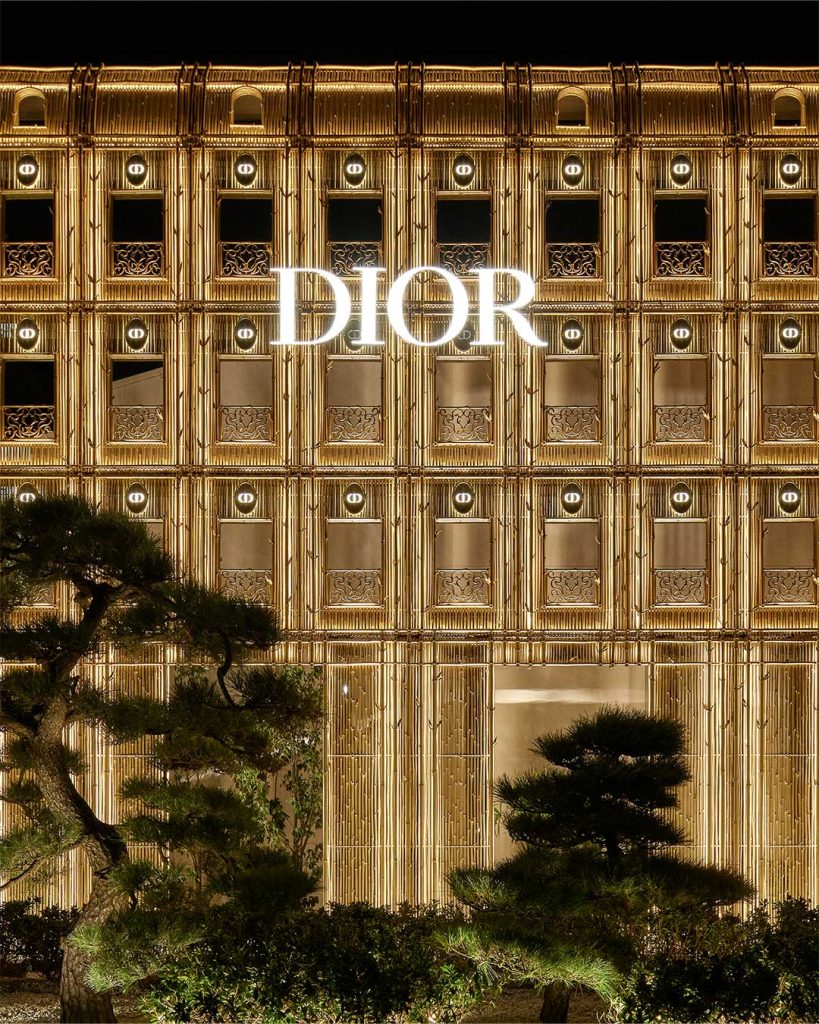
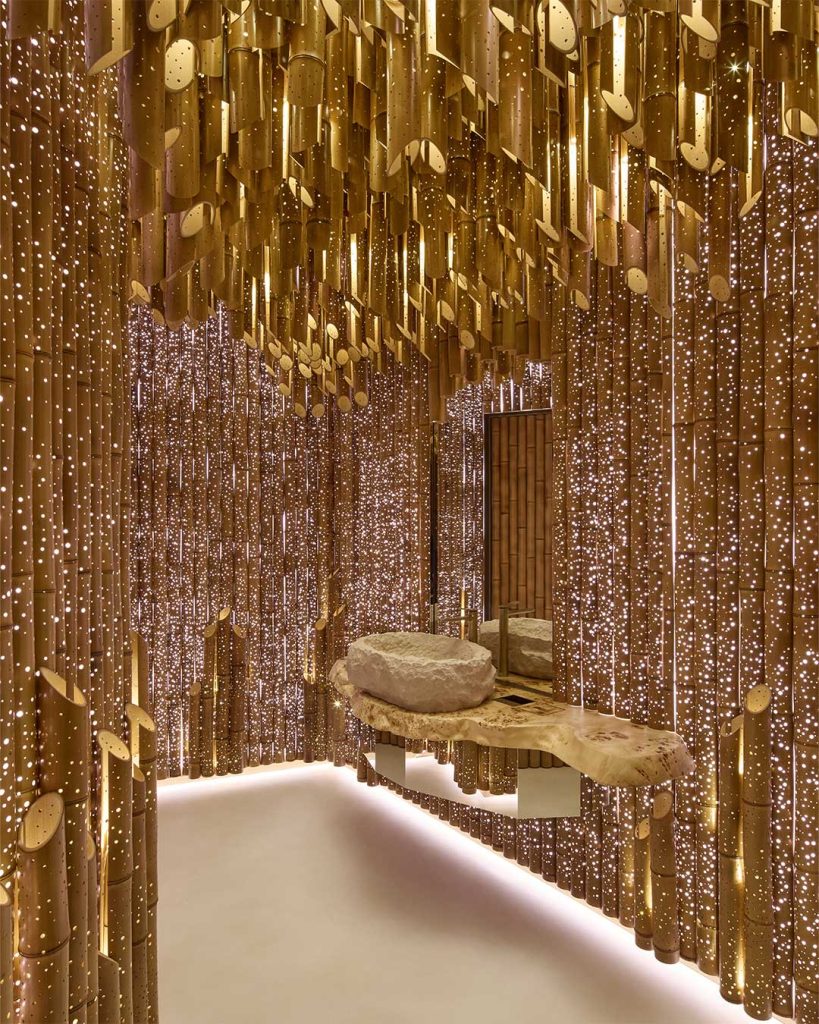
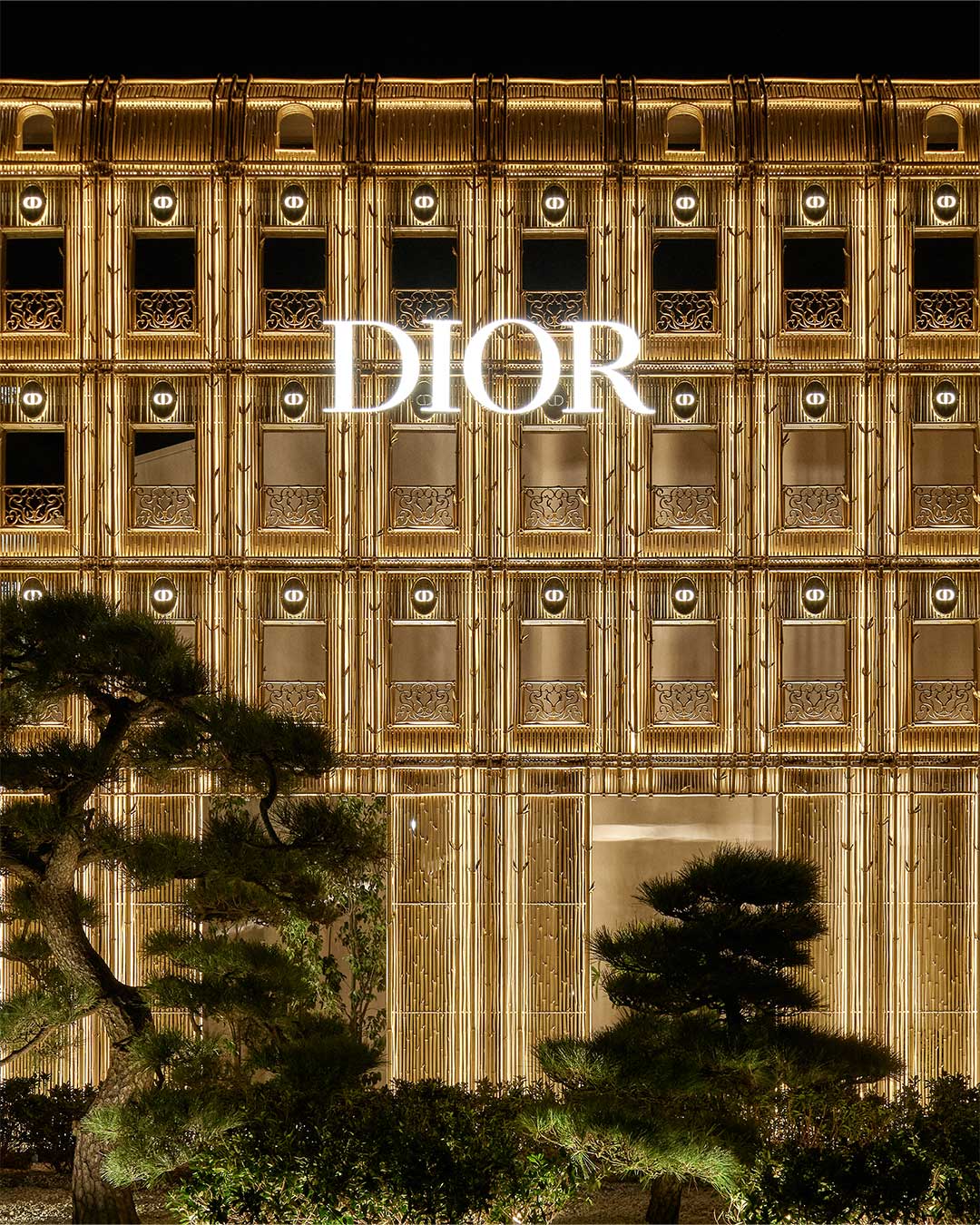
At the heart of the project is its striking architectural concept: a golden bamboo structure reinterpreting the iconic façade of Dior’s historic headquarters at 30 Avenue Montaigne.
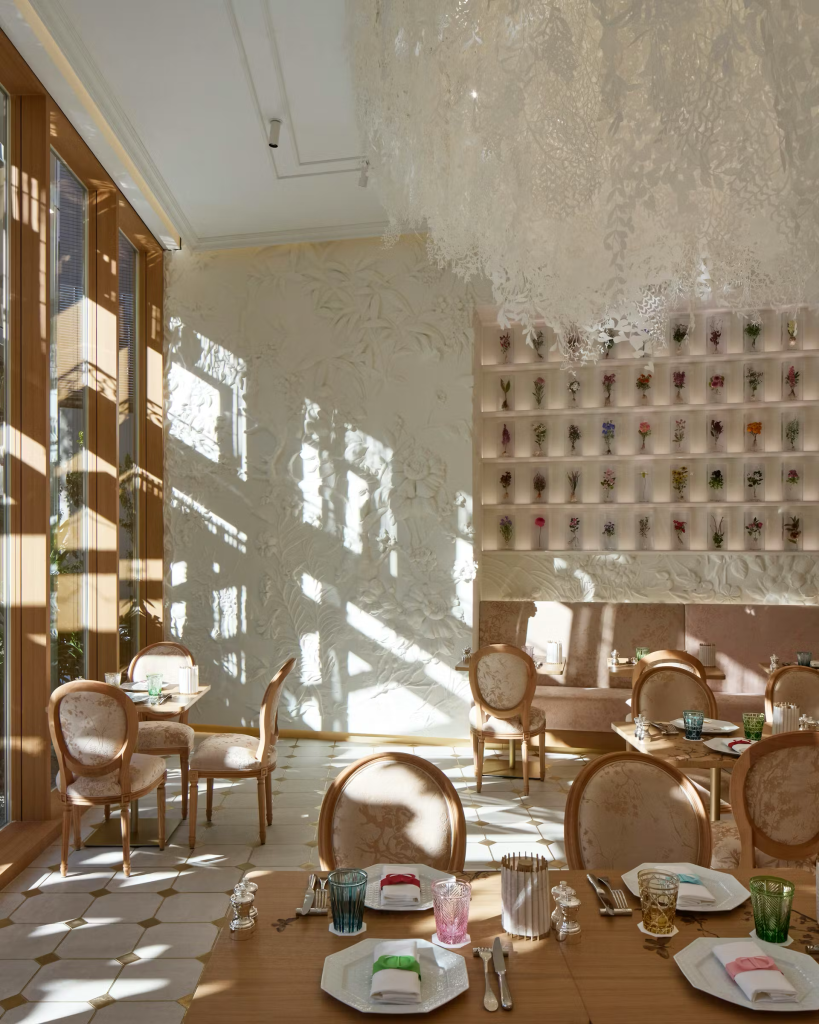
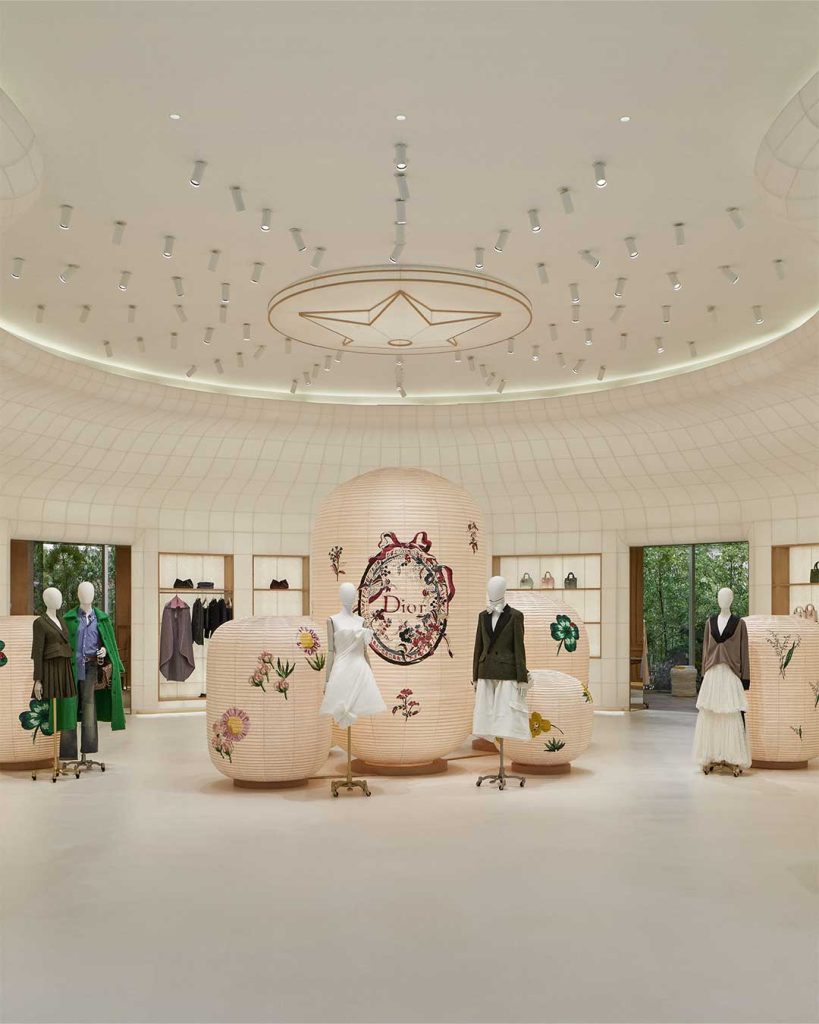
Bamboo—long revered in Japan as a symbol of resilience, purity, and harmony—becomes both material and metaphor. Gold-dipped vertical elements echo the rhythms of bamboo forests while subtly recalling the grandeur of French decorative traditions. Inside, Versailles parquet flooring meets washi-paper walls and lanterns crafted by Kojima Shoten, creating a layered dialogue between French savoir-faire and Japanese craftsmanship.
The pavilion’s scale alone signals ambition. At nearly 19,375 square feet, the space transcends conventional retail, positioning itself as a cultural destination rather than a temporary store.
Immersive Hospitality and the “Kingdom of Dreams”
Central to LVMH’s hospitality pivot is the integration of dining and experiential programming. The Bamboo Pavilion features a Café Dior concept curated by celebrated French chef Anne-Sophie Pic, inviting visitors to linger rather than browse.
This shift toward curated, approximately 90-minute dining experiences reflects a broader strategy: fostering emotional engagement through hospitality. Luxury is no longer defined solely by product acquisition but by memory-making environments.
The pavilion deepens this immersion through landscape design. A serene Zen garden by botanical artist Seijun Nishihata and a dramatic indoor floral installation by Azuma Makoto transform the interior into what Dior describes as a “Kingdom of Dreams.” The result is a sensory journey—quiet, contemplative, and visually arresting.
Hyper-Regional Collaboration
True to the “Localized Grandeur” philosophy, the pavilion foregrounds collaboration with Japanese creatives. More than 20 local artisans contributed to the project, including design studio Takt Project, textile designer Hana Mitsui, and bamboo lantern collective Chikaken.
These partnerships ensure authenticity. Rather than imposing a Parisian template onto Tokyo, Dior integrates itself into the cultural fabric of the city—offering what has been described as a “love letter” to Japan. The pavilion also commemorates the house’s 80th anniversary, reinforcing historical continuity while embracing contemporary local expression.
Strategic Context: Asia and Experiential Luxury
The Tokyo activation follows similarly high-profile localized concepts across Asia, reinforcing LVMH’s commitment to key regional markets such as Seoul and Bangkok.
Daikanyama—known for its refined boutiques, architecture, and creative energy—provides an ideal setting. The district’s upscale yet intimate character aligns seamlessly with Dior’s positioning: sophisticated, culturally aware, and emotionally resonant.
In this context, the Bamboo Pavilion becomes a case study in how high-fashion houses are evolving beyond transactional retail. Architecture, gastronomy, art, and craftsmanship converge to create immersive environments designed to build long-term affinity.
A Model for Modern Luxury Engagement
The Christian Dior Couture Bamboo Pavilion stands as a powerful example of how global brands can achieve cultural specificity without fragmenting their identity. By honoring Japanese materials, artisans, and spatial traditions—while maintaining the codes of Parisian haute couture—Dior achieves a rare equilibrium.
For luxury brands navigating increasingly discerning local audiences, the message is clear: resonance requires respect. In Tokyo, Dior has not merely opened a pavilion; it has constructed a bridge between cultures, elevating localization into an art form.